
Gold at Witchbay
Fully Permitted
Permit extended until 2027
Doug Bundy and Dave Burt local prospectors and independent owners of the historic gold claims made the discovery last fall and followed up on sampling this spring with the results that show gold in the quartz veining in the granite at the contact with the basalts.
Retired regional geologist Craig Ravanns from the Kenora district office comments on the Importance of gold in the granite at the fractures that contain quartz. The grab samples from the granite showed the assays with 520ppb of gold. Craig says the finding could lead to in-depth gold reserves within the basalts that are below the granite. The sampling in the granite along with other sampling from parallel veining in the granite could be an important part of the gold deposit at Witchbay.
Further sampling is being done at the project with new quarts veins still being exposed across the 3k structures of the historic showings. The Witchbay project is now following parallel veining next to the known exposures at the historic sites and have been finding new quartz next to the older showings therefore helping the width and length of the entire project.
The high-grade assays from the Triggs, Kite Lake and Stella claims are being followed by the teams as they continue looking for large reserves from the parallel veining that can be targets for a drill program at the FULLY PERMITTED project. The Stella showing is just north of the Wendigo mine that produced over 67,000 ounces of gold along with high silver and copper numbers. The Wendigo closed in 1943 due to lack of capitol and staffing problems. The west end of this project has never been drilled but shows promises of reserves at depth as the Wendigo mine did at 500 ft.
New Information
Potential for buried mafic volcanic rocks beneath the Dryberry Granite
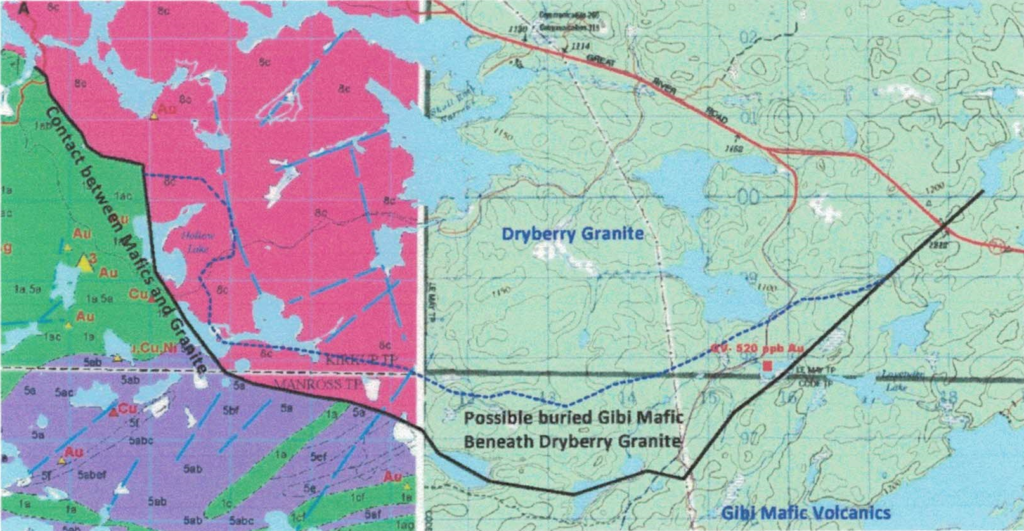
Figure 1. Geology, Contact Zone and 520 ppb Au sample site
The area underlying the Dryberry Granites near the northern surface expression of the Mafic Volcanic Rocks can have potential sites for AU-Bearing quartz veining (Figure 1)
There is unique higher-iron content (red-pink colour) within this potential area based on airborne
magnetic responses compared to the area further north within the Dryberry Granite – the response for this area is Green-yellow color (Figure 2).
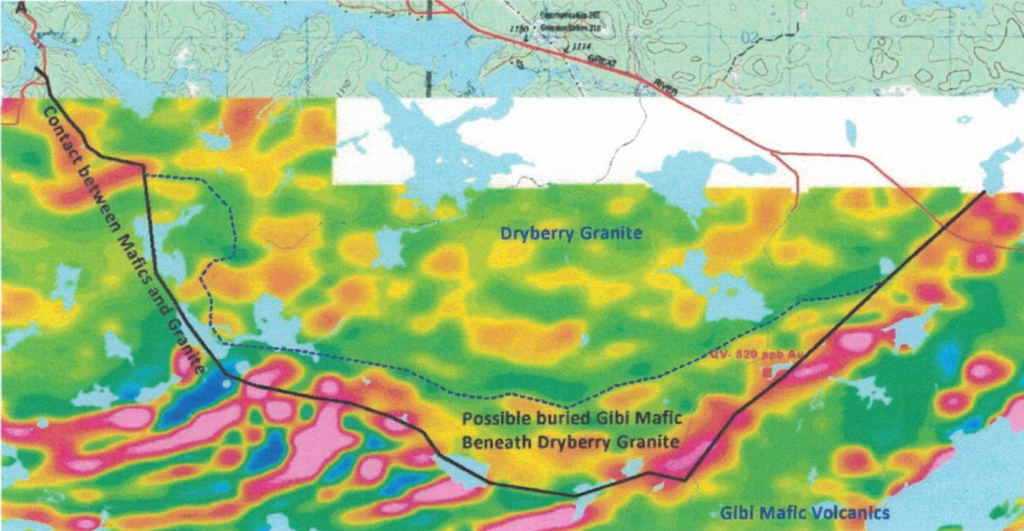
Figure 2. Airborne Magnetic Response, Contact Zone and 520 ppb Au sample site
This higher iron content in the granites near the surface contact of the mafic volcanic rock is possibly
related to these southern mafic volcanic rocks buried beneath the Dryberry Granites. The Granites in
this Au-Potential area might be a veneer of felsic intrusive rocks (Figures 1 and 2).
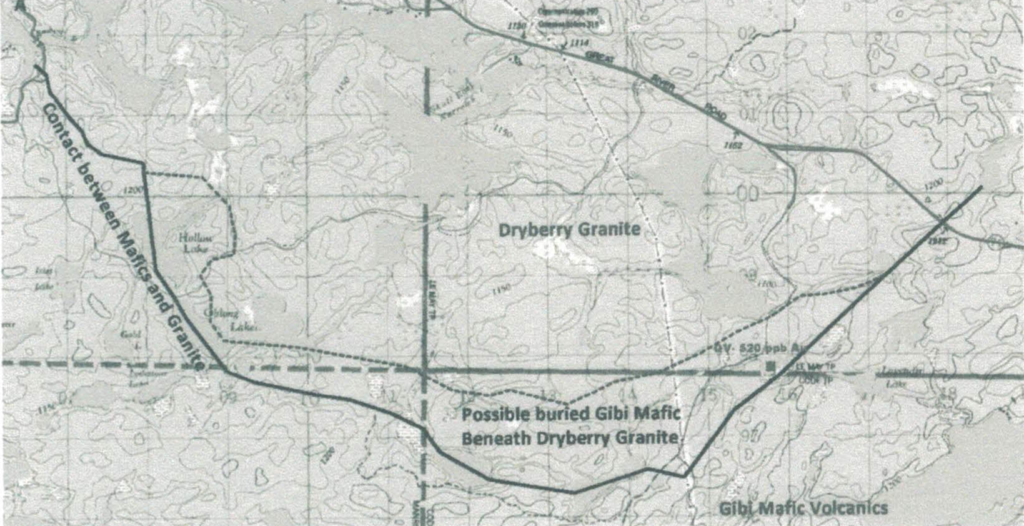
Figure 3. Potential Area for Buried Mafic Volcanic Rocks, Contact Zone and 520 ppb Au sample site
A grab sample collected from a 12-inch-wide quartz vein returned 520 ppb Au. This quartz vein cuts the
Granites and is situated 150 m north of the surface contact of the Mafic Volcanic Rocks. Numerous
quartz veins have been identified in the rocks near this sample site (Figures 1-3).
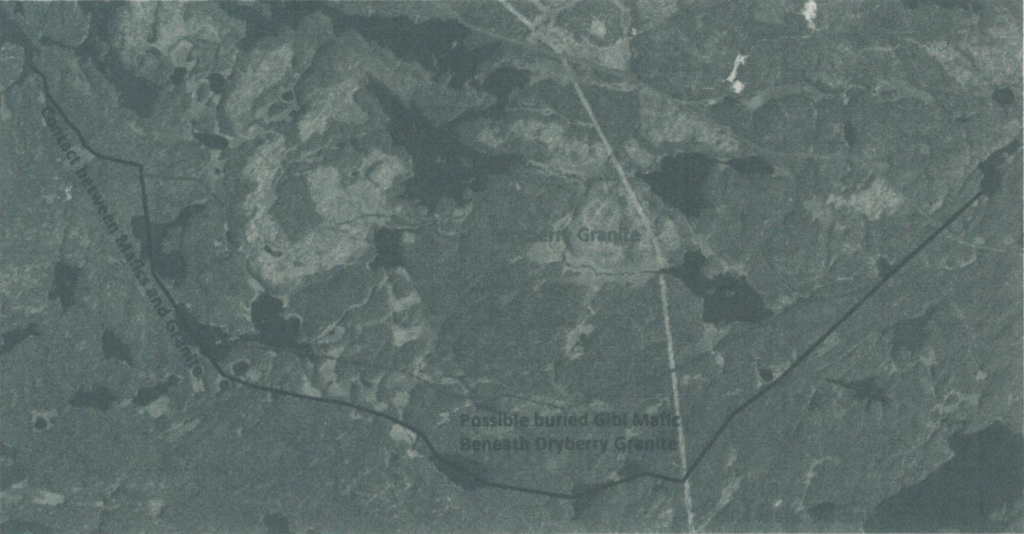
The source of the quartz veining could be from Mafic Volcanic Rocks buried beneath the Granite – this is
the Au Potential within this contact zone. Similar Au-bearing quartz veining could be located in the
extent of this Mafic Volcanic – Dryberry Granite contact zone ( Figures 1-3).